

Clear records
history record
Truck Fleet Camera Systems for Logistics Companies with Real-Time GPS and Driver Monitoring
In today’s fast-paced logistics and transportation industry, safety, efficiency, and accountability are no longer optional—they are essential. Truck fleet camera systems are rapidly becoming a cornerstone for logistics companies seeking to enhance fleet management, monitor driver behavior, and optimize operational performance. In this blog post, Shenzhen HOPE, as high quality vehicle tracking and fleet management system manufacturer, will share truck fleet camera systems for logistics companies with real-time gps and driver monitoring.
The Role of Truck Fleet Camera Systems in Logistics
Truck fleet camera systems serve multiple purposes for logistics companies:
Safety Assurance – Cameras provide real-time monitoring of both road conditions and driver behavior, helping prevent accidents and reduce liability.
Operational Transparency – Companies gain visibility into fleet movements and activities, which can streamline decision-making and improve customer service.
Regulatory Compliance – Certain AI-equipped cameras support compliance with transportation safety regulations, including driving hour limits and vehicle safety standards.
Cost Reduction – By monitoring driver behavior and vehicle condition, companies can reduce fuel consumption, maintenance costs, and insurance premiums.
Integrating high-tech features like AI dash cams, dual-channel recording, and ADAS/DMS algorithms ensures a comprehensive monitoring system for logistics fleets.
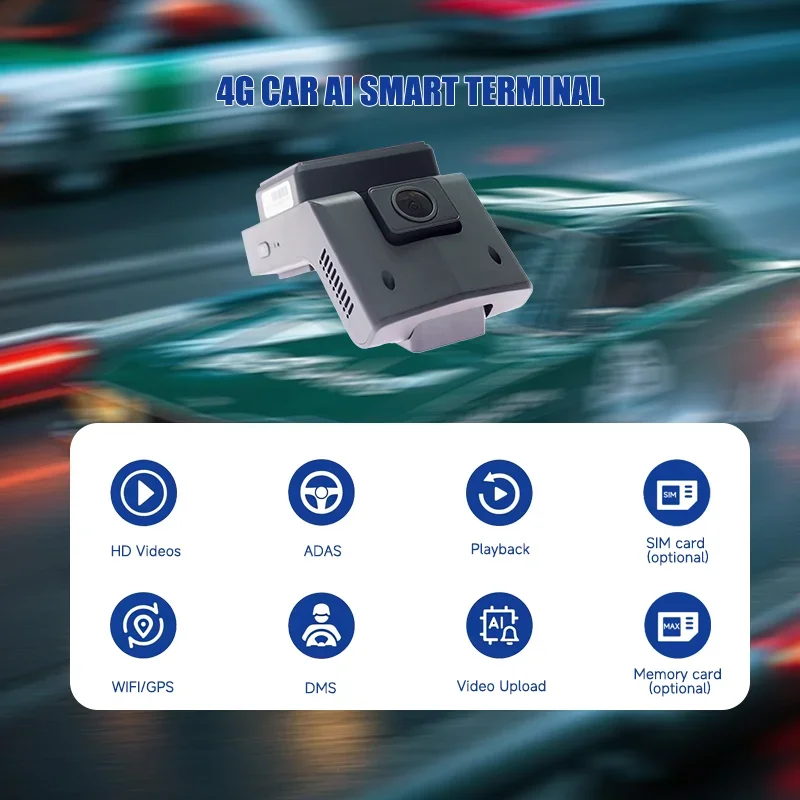
Key Features of Truck Fleet Camera Systems
When selecting a fleet camera system, logistics companies should prioritize devices that combine advanced hardware with intelligent software features. Modern systems often include:
1. Dual-Channel Video Recording
Dual-channel cameras capture both front road view and in-cabin video, offering a full perspective of driving conditions and driver behavior. High-definition (FHD 1080P) front cameras with a 140° wide-angle lens ensure clear capture of roads, traffic, and license plates. Internal cameras with light sensors and infrared night vision allow 24/7 monitoring, critical for night deliveries or rideshare vehicles like Uber, Lyft, or Grab.
2. AI-Powered Driver Monitoring and Alerts
AI algorithms integrated into truck fleet camera systems enable real-time driver behavior analysis. These features can detect:
Rapid acceleration or deceleration
Sharp turns or unsafe maneuvers
Lane departures or steering irregularities
Driver fatigue or distraction via in-cabin monitoring
By automatically generating alerts and uploading AI alarm videos, fleet managers can proactively intervene, reducing accident risks.
3. Real-Time GPS Tracking and Route Playback
With integrated 4G networking and satellite positioning, these camera systems offer real-time vehicle tracking and route playback. Fleet managers can monitor truck locations, verify delivery routes, and analyze driving patterns. Historical video playback combined with GPS data enhances accountability and provides evidence in case of disputes or insurance claims.
4. Emergency Features and Communication Tools
Modern systems often include:
SOS emergency buttons for driver safety
Two-way intercom for instant communication between drivers and fleet managers
TTS (Text-to-Speech) messaging for real-time alerts and notifications
These features ensure rapid response in critical situations, enhancing both driver safety and cargo protection.
5. Cloud Storage and Loop Recording
Truck fleet camera systems support cloud storage, allowing secure backup and remote access to recorded videos. Loop recording ensures continuous video capture by overwriting the oldest footage when SD cards reach capacity, avoiding data loss. Many systems support up to 256GB storage, accommodating long-haul trips and high-resolution footage.
6. ADAS and DSM Integration for Enhanced Safety
Advanced Driver Assistance Systems (ADAS) and Driver State Monitoring (DSM) are crucial features for logistics fleets. They support:
Collision warning and lane departure alerts
Steering wheel adjustments for left/right-hand drive
Real-time monitoring of driver attentiveness
Adaptive AI behavior analysis that improves over time
Integrating these algorithms allows fleets to proactively prevent accidents and maintain high safety standards across multiple vehicles.
Benefits for Logistics Companies
Implementing truck fleet camera systems delivers measurable benefits:
Reduced Accident Rates – Continuous monitoring and AI alerts allow early detection of unsafe driving behavior.
Lower Insurance Costs – Verified driver behavior and video evidence reduce insurance claims and premiums.
Improved Fleet Efficiency – GPS tracking and analytics enable optimized routing, reducing fuel costs and delivery times.
Enhanced Cargo Security – In-cabin and front-facing cameras protect against theft, damage, and unauthorized use of vehicles.
Regulatory Compliance – Documentation of driver behavior and routes ensures adherence to national and international transport regulations.
Choosing the Right Truck Fleet Camera System
Selecting an ideal system requires balancing hardware capabilities, software features, and operational needs:
Connectivity – 4G and GPS are standard for real-time monitoring; optional Wi-Fi or cloud integration adds flexibility.
Camera Quality – FHD or higher resolution for both front and internal cameras ensures clear evidence in all conditions.
AI Features – ADAS/DMS algorithms, AI alarm uploads, and driver fatigue monitoring enhance safety.
Storage Options – Support for SD cards and cloud storage prevents data loss during long trips.
Compatibility – Systems should integrate seamlessly with fleet management software and mobile apps.
Real-World Applications in Fleet Management
Truck fleet camera systems are used by a variety of logistics operators and transport services:
Long-Haul Trucking Companies – Monitoring drivers across hundreds of miles ensures safety and compliance.
Local Delivery Services – Dash cams reduce disputes over delivery times, vehicle usage, and route adherence.
Rideshare and Taxi Fleets – Platforms like Uber, Lyft, and Grab rely on dual-channel recording to ensure passenger safety and driver accountability.
Cold Chain and Sensitive Cargo Operators – Continuous monitoring helps track vehicle conditions and prevent cargo spoilage or damage.
Implementing Fleet Camera Systems Effectively
To maximize the value of truck fleet camera systems, logistics companies should:
Train Drivers – Explain system usage and privacy policies to drivers, ensuring cooperation and understanding.
Integrate with Fleet Software – Connect cameras to management platforms for centralized monitoring, reporting, and analytics.
Regularly Maintain Devices – Ensure firmware updates, camera lens cleaning, and storage checks to prevent downtime.
Analyze Data Proactively – Use recorded footage and AI alerts to coach drivers, identify risks, and optimize routes.
Future Trends in Truck Fleet Camera Systems
AI-Enhanced Predictive Analytics – Anticipating vehicle maintenance needs and accident risks before they occur.
5G Integration – Faster, more reliable real-time video and cloud access for fleet management.
Edge Computing – Processing video and AI data locally on devices for reduced latency and enhanced privacy.
Multi-Vehicle Coordination – Fleet-wide monitoring that synchronizes alerts, routes, and performance metrics in real time.
Conclusion
For logistics companies, modern truck fleet camera systems are no longer a luxury—they are a necessity. By combining dual-channel FHD cameras, AI-powered driver monitoring, real-time GPS tracking, ADAS/DSM algorithms, and cloud-based analytics, these systems ensure safer, more efficient, and accountable fleet operations. Companies that invest in advanced fleet camera technology can reduce accidents, lower operational costs, comply with regulations, and build trust with clients and drivers alike.
The future of fleet management lies in intelligent monitoring solutions. Embracing these systems today ensures not only safer roads but also optimized logistics operations and a stronger competitive edge.