

Clear records
history record
Commercial Vehicle Reversing Cameras for Truck and Bus Installation
In modern fleet operations, safety and operational efficiency are closely linked to driver visibility. Large commercial vehicles such as trucks, buses, delivery vans, and trailers often operate in complex environments where blind spots pose significant risks. Parking yards, urban loading docks, construction zones, and passenger terminals are all areas where reversing accidents frequently occur.
Installing commercial vehicle reversing cameras has become one of the most effective solutions for improving driver awareness and reducing collision risks. These systems provide a clear rear view, assist drivers during reversing maneuvers, and support safer fleet management practices.
In this blog post, HOPE, as high performance HD infrared cameras manufacturer, will share the advantages of commercial vehicle reversing cameras for truck and bus installation, key technical features to consider, and how modern reversing cameras improve visibility in demanding commercial environments.
Why Commercial Vehicle Reversing Cameras Are Essential for Fleet Safety
Heavy vehicles have structural blind spots that mirrors alone cannot fully cover. Long trailers, high cargo compartments, and passenger bus bodies limit rear visibility during reversing.
A properly installed commercial truck backup camera system provides drivers with real-time video feedback, allowing them to monitor obstacles, pedestrians, and nearby vehicles.
Key benefits include:
Reducing reversing collisions and parking accidents
Improving driver confidence during maneuvering
Protecting pedestrians and loading personnel
Lowering vehicle repair and insurance costs
Supporting compliance with fleet safety regulations
For fleets operating in dense urban areas, bus and truck reversing camera systems have become a critical component of driver assistance technology.
Key Features of High-Performance Truck and Bus Backup Cameras
Not all reversing cameras deliver the same performance. Fleet vehicles require robust systems capable of operating in extreme weather, poor lighting, and long operating hours.
Modern commercial vehicle rearview cameras are designed with several essential features that support reliable operation.
Ultra-Wide Viewing Angle for Maximum Rear Visibility
Wide-angle lenses are crucial for eliminating blind spots behind large vehicles.
A 130° ultra-wide viewing angle allows drivers to see a broader area behind the truck or bus, including:
Rear bumper clearance
Nearby vehicles or equipment
Pedestrians or cyclists approaching from the sides
This expanded field of view is particularly useful when maneuvering large delivery trucks or buses in tight spaces.
High Definition Image Output for Clear Monitoring
Image clarity directly affects driver reaction time.
High-quality HD reversing cameras for commercial vehicles often support:
AHD signal output
720P or 1080P video resolution
Multi-layer glass lenses for improved image accuracy
A 6-layer glass lens structure enhances optical performance and reduces distortion, ensuring drivers receive clear images even when the vehicle is moving slowly in reverse.
Superior Night Vision for Low-Light Environments
Many fleet vehicles operate during nighttime hours, early mornings, or in poorly lit industrial areas.
To address this challenge, modern truck backup cameras with night vision integrate infrared illumination technology.
Typical night vision features include:
18 built-in infrared LEDs
IR-CUT automatic switching
Night visibility up to 50 feet
This allows the commercial rearview camera to capture clear images even in complete darkness, helping drivers reverse safely in loading yards, warehouses, and roadside stops.
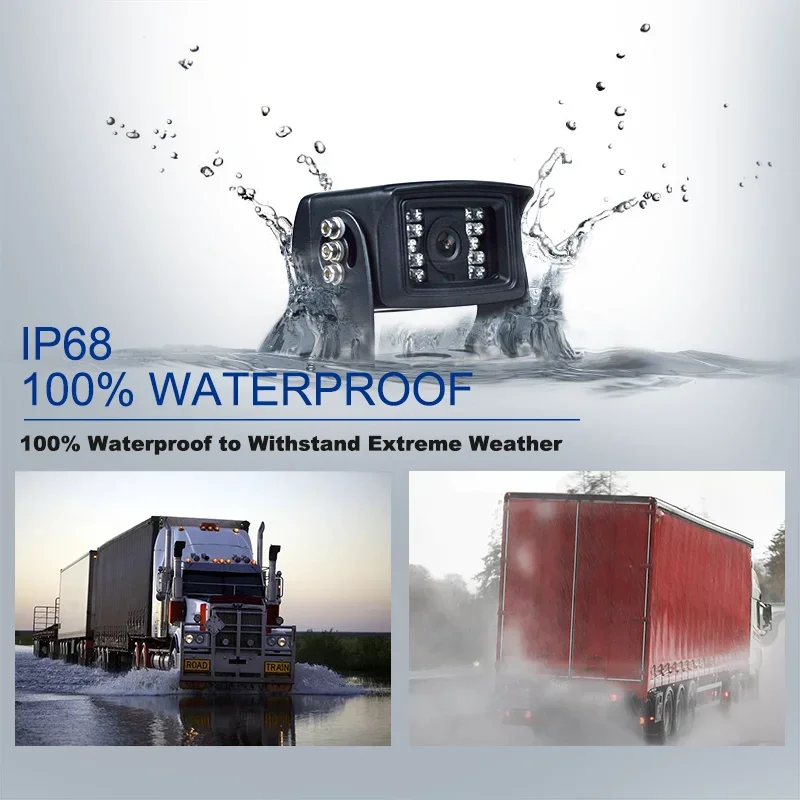
Waterproof Construction for Harsh Outdoor Conditions
Commercial vehicles face rain, dust, mud, and road debris daily.
A high-quality waterproof reversing camera for trucks typically carries an IP68 rating, which ensures protection against:
Heavy rain and water splashes
Snow and freezing conditions
Road dust and dirt buildup
The sealed design allows the camera to maintain stable operation even when installed on the exterior rear panel of buses or trailers.
Durable Metal Housing for Long-Term Reliability
Durability is critical for commercial applications where equipment is exposed to constant vibration and weather exposure.
Premium vehicle reversing cameras for fleets often feature:
Zinc metal housing
Stainless steel mounting screws
Anti-rust construction
This structural design prevents corrosion and extends the service life of the camera system, particularly for vehicles operating in coastal or high-humidity environments.
Installation Considerations for Truck and Bus Camera Systems
Proper installation determines the effectiveness of a commercial vehicle reversing camera system.
Fleet managers and technicians should consider several key factors during installation.
Choosing the Correct Camera Mounting Position
The rear camera should be positioned to provide the widest possible field of view while minimizing obstructions.
Common installation locations include:
Rear center above the license plate
Top rear edge of cargo trucks
Bus rear panel above the window line
Trailer rear frame
Positioning the camera at a slightly elevated location often improves visibility and reduces glare from headlights.
Selecting the Right Lens Angle for Vehicle Type
Different commercial vehicles require different viewing angles.
Typical configurations include:
130° wide-angle lenses for trucks and buses
Adjustable lenses customized up to 95° viewing angle for specific installations
Narrower angles for focused trailer alignment
Selecting the correct lens helps drivers maintain accurate spatial awareness while reversing.
Using Aviation Connectors for Stable Signal Transmission
Reliable signal transmission is critical for commercial vehicles that operate continuously.
Many professional truck backup camera systems use a 4-pin aviation connector, which offers several advantages:
Secure locking connection
Resistance to vibration and movement
Stable video signal transmission
Simplified installation and maintenance
These connectors are widely used in fleet-grade monitoring systems due to their reliability.
Power Efficiency for Continuous Operation
Fleet vehicles often run multiple electronic systems simultaneously.
Low power consumption ensures the vehicle reverse camera system operates efficiently without overloading electrical systems.
Typical operating specifications include:
Operating current around 58mA
Approximately 150mA when infrared night vision activates
Efficient power usage allows cameras to run continuously without impacting vehicle battery performance.
Environmental Performance for Commercial Applications
Fleet vehicles operate in diverse climates and environments.
High-quality commercial reversing cameras for trucks and buses are designed to function across a wide temperature range.
Typical specifications include:
Operating temperature: -20°C to 75°C
Storage temperature: -30°C to 85°C
This wide tolerance ensures stable performance in extreme conditions such as freezing winters, desert heat, or high-altitude environments.
Image Processing Technology That Improves Visibility
Modern commercial vehicle camera systems integrate automatic image optimization technologies.
These include:
Auto White Balance
Automatically adjusts color balance to maintain accurate image tones under different lighting conditions.
Automatic Gain Control (AGC)
Amplifies video signals in low-light environments to maintain clear images.
Backlight Compensation
Balances strong light sources such as headlights or sunlight to prevent image washout.
These features ensure drivers receive clear and stable video feedback regardless of environmental lighting changes.
Applications of Reversing Cameras in Commercial Fleets
Reversing cameras are used across a wide range of commercial vehicles.
Common applications include:
Long-Haul Trucks
Drivers can safely reverse large trailers in logistics hubs and freight terminals.
City Buses
Bus operators can monitor pedestrians, bicycles, and passengers behind the vehicle.
Delivery Vans
Drivers navigating urban streets benefit from improved rear visibility during frequent stops.
Construction Vehicles
Heavy equipment operating in crowded construction zones relies on cameras to detect workers and obstacles.
Utility Service Vehicles
Maintenance fleets often operate in tight roadside environments where reversing visibility is critical.
Across these applications, commercial vehicle backup camera systems significantly reduce operational risks.
How Reversing Cameras Improve Driver Efficiency
In addition to safety, reversing cameras improve driver workflow.
Drivers spend less time repositioning vehicles and making repeated adjustments when parking or docking.
Operational advantages include:
Faster loading dock alignment
Reduced stress for drivers
Improved maneuvering in narrow spaces
Greater confidence for new or less experienced drivers
These benefits contribute to more efficient fleet operations and smoother logistics workflows.
Future Trends in Commercial Vehicle Camera Technology
The evolution of commercial vehicle reversing camera technology continues to improve driver assistance capabilities.
New developments include:
Multi-camera surround view systems
AI-based pedestrian detection
Integrated DVR recording for fleet monitoring
Wireless camera transmission solutions
Smart fleet telematics integration
These innovations will further enhance safety and operational visibility for modern transportation fleets.
Conclusion
For fleets operating trucks, buses, and commercial vehicles, improving rear visibility is essential for both safety and efficiency. Installing commercial vehicle reversing cameras for truck and bus installation provides drivers with a clear rear view, reduces blind spots, and supports safer maneuvering in complex environments.
With features such as HD video resolution, ultra-wide viewing angles, infrared night vision, IP68 waterproof protection, and durable metal housing, modern reversing camera systems are designed to withstand the demanding conditions of commercial transportation.
By selecting high-quality truck and bus backup cameras and installing them properly, fleet operators can significantly reduce reversing accidents, protect personnel, and improve overall operational reliability. As camera technology continues to evolve, these systems will remain a key component of modern commercial vehicle safety solutions.=