
Clear records
history record

HD Monitor
What is Vehicle HD Monitor with IPS screen?
To understand IPS screens, we first need to understand their technical nature. It stands for In-Plane Switching, a core panel technology for liquid crystal displays (LCDs). Its core advantage is that it addresses the narrow viewing angles of traditional screens. By altering the arrangement and deflection of liquid crystal molecules, it achieves consistent color and brightness at all angles.
For dashcams used on large vehicles, the benefits of IPS screens are perfectly suited to their specific usage scenarios, primarily in the following three key areas:
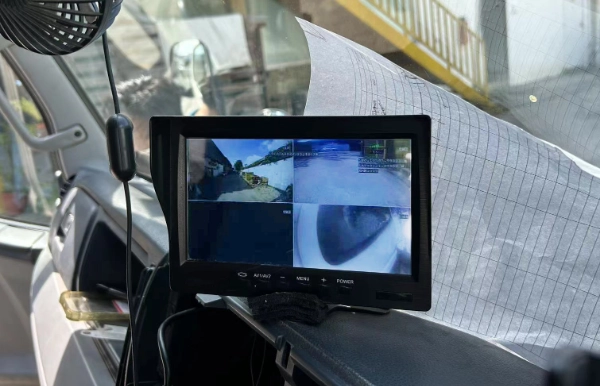
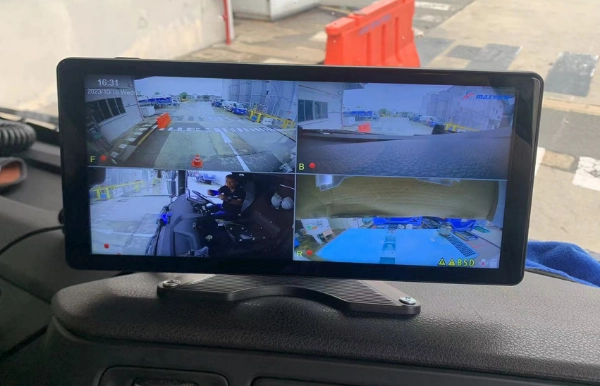
1. Wider viewing angle, adapting to the complex installation and viewing scenarios
of large vehicles. Large vehicles (such as vans and trucks) have spacious cabs and complex layouts. Dashcams may be mounted to the left or right (e.g., near the A-pillar). Drivers often view the screen from an angle, such as the front or side, rather than looking directly at it (for example, when steering with both hands).
Traditional screens (such as TN screens) experience whitish images, distorted colors, or even poor visibility when viewing the screen from a different viewing angle. IPS screens, however, offer a wide viewing angle (up to 178° horizontally and vertically) allowing drivers to clearly see blind spots and playback footage from any angle, without having to adjust their sitting posture and avoid distraction.
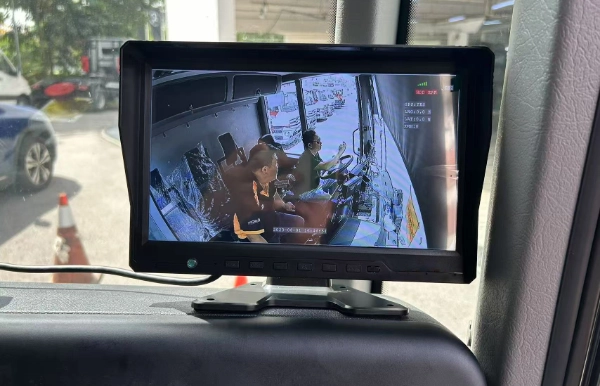
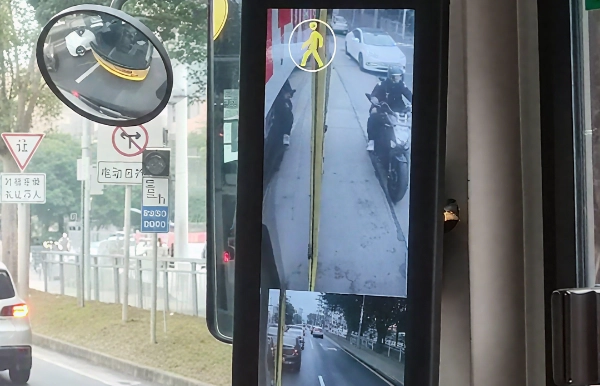
2. More realistic colors and brightness, enabling key information to be clearly seen even in strong sunlight.
Large vehicles often travel long distances, encountering extreme lighting conditions such as strong sunlight (direct midday sun) and backlight (early morning/evening driving). Poor screen quality can easily lead to blurred vision due to glare.
IPS screens offer higher color reproduction (more faithfully representing the actual colors of the road and vehicles, such as distinguishing a red car from an orange warning sign). Furthermore, most IPS screens have a wider brightness adjustment range (adapting to strong sunlight). Even in direct sunlight, this reduces reflection interference, allowing drivers to clearly distinguish pedestrians and non-motorized vehicles in blind spots, as well as license plate details in recorded footage, avoiding misjudgments caused by poor visibility on the screen.
3. The screen is more stable and durable, suitable for the bumpy driving conditions of large vehicles.
When driving large vehicles (such as on national highways and construction sites), the body of the vehicle is subject to greater vibration than ordinary cars. If the screen is not shock-resistant, it is prone to display distortion and touch failure (for recorders with touch screens). The
liquid crystal molecules of IPS screens are more stable, and the structural design of most IPS panels is more adaptable to vibration environments. Not only is the display less prone to "jitter and blur" during long-term bumpy driving, but the touch response is also more stable (if the device has a touch screen function), ensuring that the driver can still operate smoothly in complex road conditions (such as switching blind spot views and retrieving video footage).
Vehicle HD Monitor Manufacturing Factory
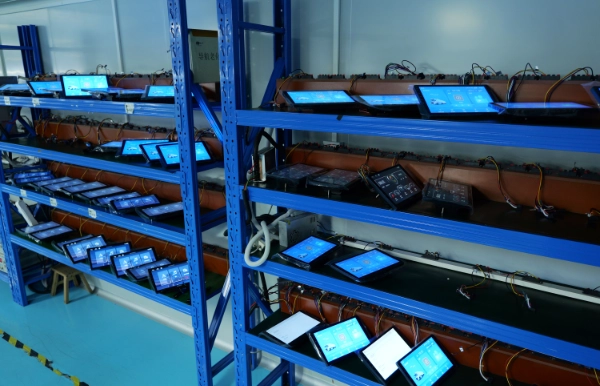

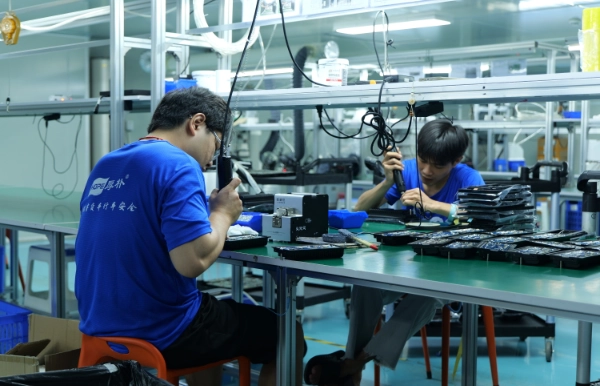
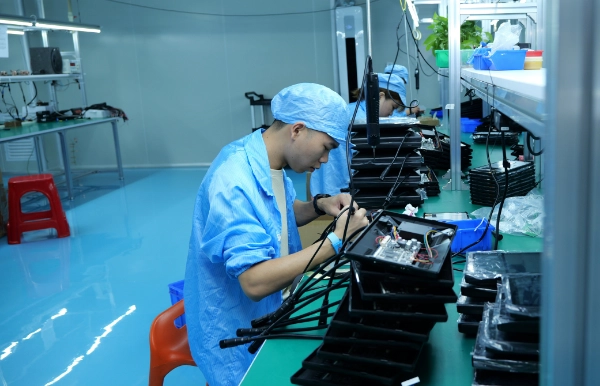
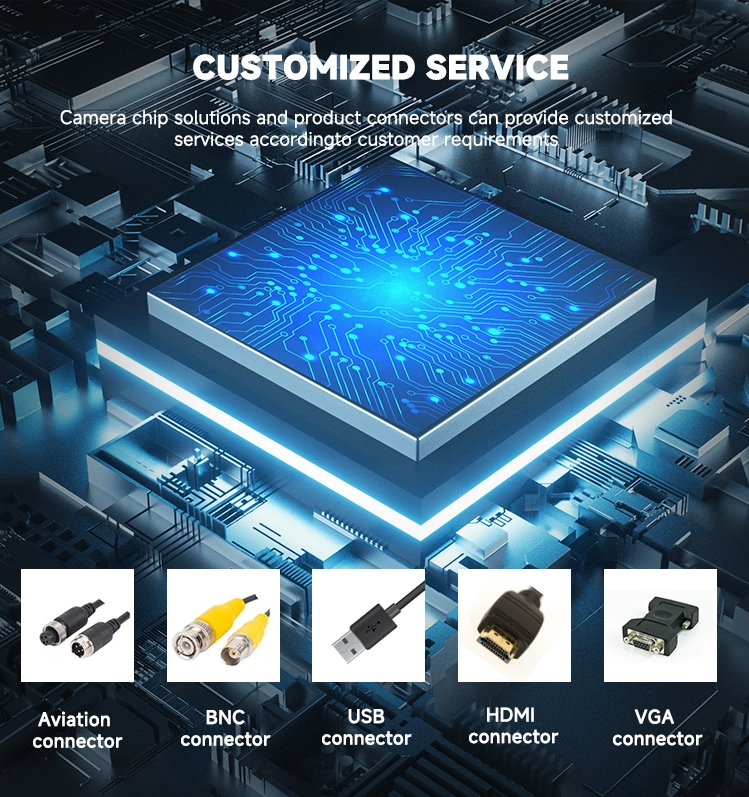
Our factory can manufacture IPS screens in sizes of 7 inches, 9 inches, 10.1 inches, etc. We can also customize different interfaces according to your requirements.