

Clear records
history record

HD Camera
What types of Vehicle HD Cameras do we produce?
✔ Front-facing Camera: Typically installed at the front of the vehicle, it is the core component of a dashcam. It generally features high resolution, capable of reaching 1080P or higher, paired with a wide-angle lens for a broad field of view. It clearly records road conditions ahead, including vehicle trajectories, traffic lights, pedestrians, and more, helping drivers understand road conditions and providing critical evidence in the event of an accident.
✔ Rear-view Camera: Installed at the rear of the vehicle, it has a resolution similar to the front-view camera and also features a wide-angle lens. In addition to recording rear-view driving conditions, it is primarily used to assist with reversing. Some models also include a reverse-signal function, automatically switching to an enlarged reverse view and overlaying an electronic ruler during reversing, helping drivers assess rear distances and obstacle positions to prevent collisions.
✔ Side-view Camera: Typically installed on both sides of the vehicle, such as below the side mirrors, to cover blind spots on the vehicle's sides. When the driver activates the turn signal, the camera automatically switches to the corresponding side's view, allowing the driver to clearly understand the vehicle's side conditions and reduce accidents caused by blind spots, thereby enhancing driving safety.
✔ Cargo Box Camera: An optional feature, primarily used to monitor the interior of the cargo box. It allows real-time viewing of cargo loading status to prevent theft or damage, particularly important for logistics and transportation vehicles. Some cargo box cameras also feature night vision capabilities, enabling clear imaging of the cargo box interior even at night.
✔ Panoramic Camera: Typically composed of multiple cameras, it achieves a 360°stereo surround view effect. Through image processing, it corrects distortion, performs perspective transformation, image stitching, and fusion on the footage from each camera, providing a comprehensive, blind-spot-free view of the vehicle's surroundings. This helps drivers eliminate visual blind spots around the vehicle, offering significant convenience during parking, turning, and other scenarios.
✔ Interior Camera: Some large vehicle dashcams are equipped with interior cameras, typically using infrared night vision technology to capture clear details inside the vehicle in low-light or no-light conditions. It is primarily used to monitor interior conditions, such as the driver's state and passenger behavior. For passenger vehicles or vehicles with special requirements, it serves a safety monitoring and management function.
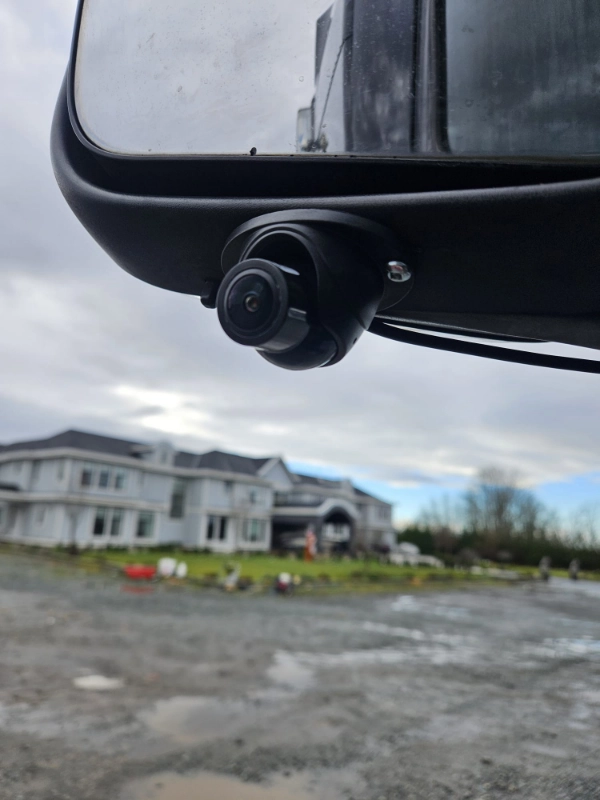
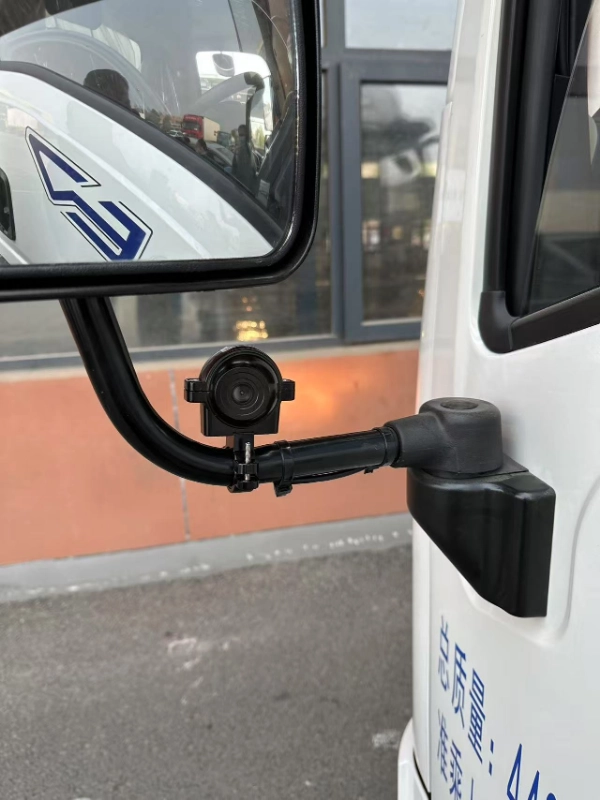
Night vision cameras are mainly divided into two types, both of which we manufacture: infrared cameras and starlight night vision cameras.
✔ Working Principle : Infrared cameras emit infrared light, illuminate objects, and then receive the reflected infrared signal to create an image. Reflecting the infrared light, they capture images and can operate even in completely dark environments. Starlight night vision cameras, on the other hand, use highly sensitive image sensors and wide-aperture lenses to capture weak natural light, such as starlight and moonlight, amplifying and processing it to create an image. They require a certain amount of ambient light to function effectively.
✔ Image Quality : Infrared cameras typically produce black and white images, resulting in relatively low image fidelity. Starlight night vision cameras can produce color images in bright or low-light environments, offering high color fidelity, detailed image quality, minimal noise, and a clear image. However, in complete darkness, they may automatically switch to infrared mode, resulting in a black and white image.
✔ Suitable Applications: Infrared cameras are suitable for completely dark environments, such as underground parking lots and outdoor areas at night. Starlight night vision cameras are suitable for low-light environments, such as city roads and illuminated streets at night, providing clear color images and facilitating the identification of vehicles, pedestrians, and other details.
Advantages of Infrared Cameras
✔ Excellent imaging in low-light conditions: They produce clear images in complete darkness, effectively improving drivers' ability to predict distance and time at night, reducing the risk of accidents.
✔ Strong anti-interference capability: Unaffected by changes in light, they avoid glare from oncoming vehicles, allowing drivers to monitor road conditions in real time.
✔ Good concealment: Infrared light is invisible to the human eye, making it difficult to detect during operation, making it ideal for scenarios requiring covert surveillance.
Advantages of Starlight Night Vision Cameras
✔ Clear color images: They produce color images in low-light conditions, revealing greater detail than the black-and-white images of infrared cameras. This allows for more accurate identification of objects and scenes, such as the color of vehicles and pedestrians' clothing, and offers advantages in accident identification.
✔ No additional lighting required: Relying on low ambient light, they produce images, eliminating the need for their own infrared lamps, which reduces energy consumption and avoids potential interference from infrared lamps.
✔ Delicate image quality with minimal noise: Using technologies such as a high-sensitivity sensor and a large aperture lens, they produce images that are more detailed, less noisy, and brighter than standard cameras in the same low-light conditions, providing enhanced visual quality.
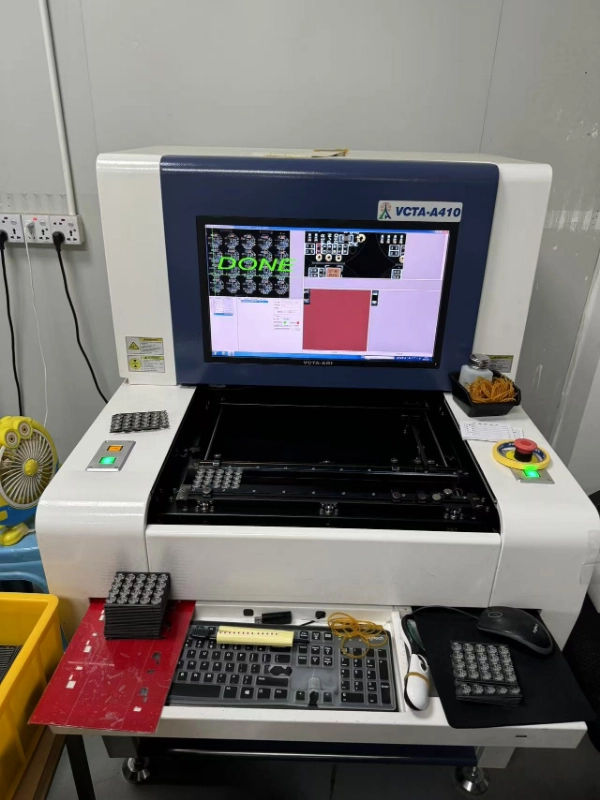
Vehicle HD Camera Manufacturing Factory
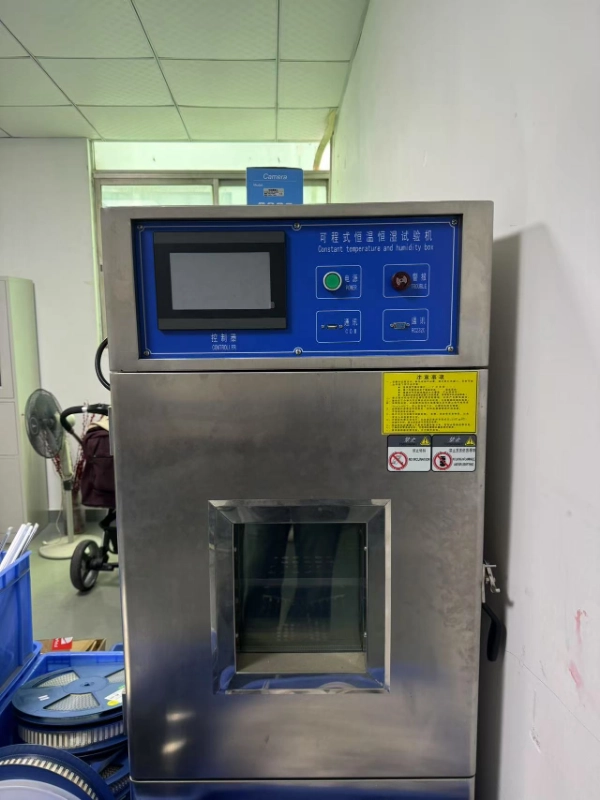
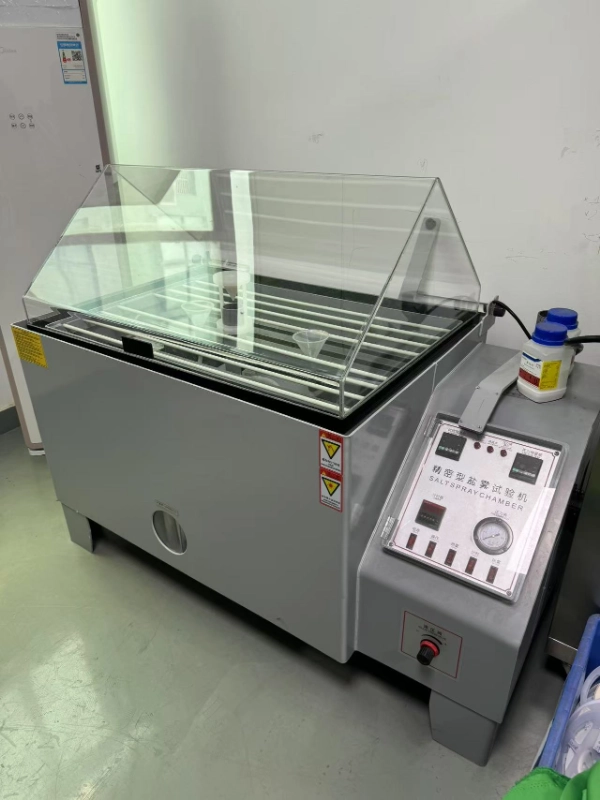

Why Choose Shenzhen HOPE?
Since its establishment in 2008, it has more than fifteen years of manufacturing experience.
Shenzhen HOPE R&D Technology has five outstanding software engineers and two hardware engineers.
We support OEM and ODM, and the delivery time is usually only one week.
Possess "ISO9001", "IATF16949", CQC, EU CE, E-mark, RoHS and US Fcc certification