

Clear records
history record
【Safety Popularization】Eight Key Safety Precautions for Hazardous Goods Transport Vehicles
Hazardous goods transport vehicles are of utmost importance in the field of road transportation due to their special nature and potential hazards.
Hazardous goods transported by such vehicles usually have properties such as corrosiveness, spontaneous combustibility, flammability, toxicity, and explosiveness. Because of the special physical and chemical properties of hazardous goods, if the protection during transportation is improper, accidents are very likely to occur, and the consequences of such accidents are more serious than those of general vehicle accidents.
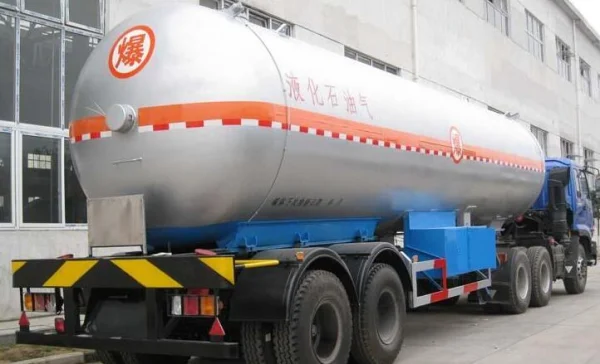
Therefore, to ensure safety, the following eight points should be noted during the transportation of hazardous goods:
01 Pay Attention to Packaging
Before loading, hazardous goods should be safely packaged according to their properties, the transportation route, and the road conditions along the way. The packaging must be firm and tight, and clear, standardized, and easily identifiable markings should be made on the packaging.
02 Pay Attention to Loading and Unloading
The roads, lighting, signs, and fire-fighting facilities at the loading and unloading site of hazardous goods must meet the safety conditions for loading and unloading. When loading and unloading hazardous goods, the vehicle should be parked outdoors. The loading and unloading workers should pay attention to their own protection and wear the necessary protective equipment. Strictly abide by the operating procedures, and handle the goods gently. Knocking, impacting, rolling, applying excessive pressure, and inverting are strictly prohibited. For goods that are afraid of moisture, they should be covered with a tarpaulin. The goods must be neatly stacked and firmly tied. Hazardous goods with different properties should not be loaded in the same vehicle. For example, detonators and explosives should never be loaded together.
03 Pay Attention to Vehicle Selection
Appropriate vehicles must be selected for transporting hazardous goods. Explosives, first-class oxidizers, and organic oxides should not be transported by full-trailer truck trains, three-wheeled motor vehicles, motorcycles, human tricycles, or bicycles. Explosives, first-class oxidizers, organic peroxides, and first-class flammable goods should not be transported by tractors. Except for second-class fixed hazardous goods, other hazardous goods should not be transported by dump trucks.
04 Pay Attention to Fire Prevention
Fire is a major concern during the transportation of hazardous goods. Tools that do not generate sparks should be used during loading and unloading. Smoking is strictly prohibited inside the vehicle. The vehicle should not approach places with open flames, high temperatures, or direct sunlight. For oil tankers transporting petroleum products, the grounding wire should be properly installed when the vehicle is parked or during loading and unloading. When driving, the grounding wire should touch the ground to prevent fires caused by static electricity.
05 Pay Attention to Driving
Vehicles transporting hazardous goods should be equipped with the markings specified in GB13392-92 "Markings for Vehicles Transporting Dangerous Goods on Roads". The operation of the vehicle must strictly comply with traffic, fire protection, public security, and other regulations. The speed should be controlled, the distance from the vehicle in front should be maintained. In case of any situation, the speed should be reduced in advance to avoid emergency braking. Illegal overtaking is strictly prohibited to ensure driving safety.
06 Pay Attention to Leakage and Spillage
When there is a leakage or spillage of hazardous goods during transportation, appropriate measures should be taken according to the different properties of the hazardous goods. When explosives are scattered, they should be moved to a safe place, and the packaging should be repaired or replaced. For the scattered explosives, they should be soaked with water in a timely manner, and the local public security and fire-fighting personnel should be called to handle it. When there is a leakage from the tank containing compressed gas or liquefied gas, it should be moved to a ventilated area, and the leaking cylinder should be watered to cool it down. When liquid ammonia leaks, it can be immersed in water. Other highly toxic gases should be immersed in lime water. When flammable solid items are scattered, the scattered packaging should be quickly moved to a safe place. When yellow phosphorus is scattered, it should be immediately immersed in water. Metals such as sodium and potassium must be immersed in an iron drum filled with kerosene or anhydrous liquid paraffin. When flammable liquids leak, the leaking part should be kept upward in a timely manner, and the goods should be moved to a safe and ventilated place for repair or replacement of the packaging. The leaked substances should be covered with yellow sand and dry soil and then cleaned up.
07 Pay Attention to Parking
Vehicles loaded with hazardous goods should not be parked in schools, government agencies, marketplaces, places of historical interest, or scenic spots. If it is necessary to carry out loading and unloading operations or park temporarily in the above areas, safety measures should be taken and the consent of the local public security department should be obtained. When parking, someone should be left to guard the vehicle. Idle people are not allowed to approach the vehicle. The vehicle should be guarded at all times to ensure its safety.
08 Pay Attention to Cleaning the Compartment
After unloading the hazardous goods, the residues on the vehicle should be cleaned up. The vehicles and tools contaminated by hazardous goods must be scrubbed and disinfected. It is strictly prohibited to transport edible items, medicinal items, feed, and animals and plants without thorough disinfection.
During the transportation of hazardous goods by vehicles, due to the properties of combustion, explosion, corrosion, toxicity, and radioactivity of the goods themselves, or due to external factors such as friction, vibration, impact, exposure to sunlight, or changes in temperature and humidity, accidents that endanger lives and property are likely to occur. Therefore, during the transportation of hazardous goods, timely protection should be carried out to avoid man-made accidents.
Every practitioner engaged in the transportation of hazardous goods should always keep in mind the safety responsibilities to ensure that every link in the transportation of hazardous goods complies with the norms and jointly maintain the safety and stability of road transportation.