

Clear records
history record
Safety is as weighty as Mount Tai —— Dedicated to every truck driver on the go
On the grand stage of road transportation, truck drivers are the well-deserved protagonists. You drive these steel giants, shuttling between cities and villages, providing a continuous stream of power for economic development. However, during the journey, safety is always of utmost importance. Today, we will talk about the matters related to the safe driving of truck drivers, hoping to escort every one of your trips.
I. Thorough inspections before departure are essential
Before setting out, be sure to conduct a comprehensive inspection of the vehicle. From the wear condition of the tires and whether the tire pressure is normal, to whether the braking system is sensitive and effective; from the brightness of the lights and whether the turn signals are flashing normally, to whether the liquid levels of the engine oil and coolant are within a reasonable range, every detail is related to driving safety. Don't overlook these inspections just because you're in a hurry. A small oversight may lead to major problems on the way. For example, insufficient tire pressure may cause a tire blowout, and a malfunction of the braking system may cause the vehicle to lose control at a critical moment, with unimaginable consequences. Therefore, take some time to carefully inspect the vehicle and let your beloved car welcome the journey in its best condition.
II. Drive cautiously during the journey to ensure safety
1.Driving skills for special road sections
Mountain roads: Shift to a low gear in advance on long downhill sections to avoid stepping on the brakes for a long time. When turning, follow the principle of "decelerate, honk the horn, and drive on the right side". When driving at night, turn on the high beams, and switch to the low beams in advance when meeting oncoming vehicles.
Urban roads: Pay attention to the "inner wheel difference" (it can reach 3-5 meters for large trucks) when turning right at intersections. Slow down to below 30 km/h in advance when passing through school areas. Maintain a vehicle distance of more than 100 meters in tunnels and do not change lanes.
2.Key points of defensive driving
The "five-second rule": Maintain at least a 5-second reaction distance from the vehicle in front. Observe the rearview mirrors and turn your head to confirm the blind spots before changing lanes. When encountering an emergency, slow down first and then turn the steering wheel. Switch to the low beams 500 meters in advance when meeting oncoming vehicles at night. Lightly step on the brakes to restore the braking performance after passing through a waterlogged section.
Data support: According to statistics from the Ministry of Transport, the use of defensive driving techniques can reduce the accident occurrence rate by 70%.
3.Application of intelligent devices
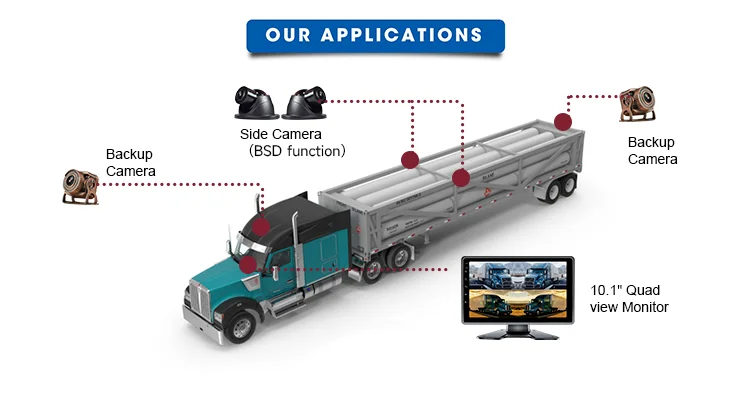
Install a blind spot monitoring system (BSD). Use a fatigue warning bracelet (to monitor heart rate variability). Equip with a Beidou positioning system (to monitor the vehicle speed and route in real time). Install a tire pressure monitoring device (TPMS).
III. Solutions for special scenarios
1.Handling in extreme weather
In heavy rain: Turn on the front and rear fog lights and keep the windshield wipers on the high-speed gear. If the wading depth exceeds half of the tire, detour. Lightly step on the brakes after wading to restore the braking performance.
On icy and snowy roads: Install snow tires or anti-skid chains. Start in second gear and maintain a uniform speed. Maintain a safety distance of more than 30 meters when climbing a slope.
2.Emergency response to sudden failures
Tire blowout handling: Grasp the steering wheel firmly and step on the brakes slowly. Try to pull over and turn on the hazard warning lights. Use triangular wooden blocks to fix the wheels when changing the spare tire.
Brake failure: Shift to a low gear to use the engine braking. Use the "point braking" method when pulling the handbrake. Use roadside obstacles to slow down if necessary.
Dear truck driver friends, your safety concerns the hearts of countless people. Every time you set out, your families are looking forward to your safe return. I hope you will keep these key points of safe driving in mind, drive cautiously, and let safety accompany every journey. Because only by arriving safely can it be considered a perfect transportation. Let's take responsibility for our own lives and contribute to road traffic safety.